Why Community-Centric Platforms Win (And How I Built One That Worked)
Community serves as the fundamental infrastructure of a successful business. Learn how I built a connection-driven platform that reached 300+ members in two months, and discover why shifting from engagement to genuine belonging is the ultimate growth engine for modern founders.


Words by
Bruno Mucheroni
The decision to build a community often begins with a fundamental need for connection rather than a simple desire for engagement metrics. When I started this journey, I was not chasing a specific number of followers or looking for a way to boost my statistics; I was searching for a room. I wanted to create a digital table where founders and business owners could speak openly, share their wins, and vent about their challenges without the pressure of a performative professional environment. I realized early on that focusing on the quality of the interactions within that room was far more important than the total volume of the audience. This mindset made all the difference in the world. A community is far more than a nice-to-have feature; it is the core infrastructure of a modern business. It is the place where the customer journey becomes rooted and where long-term relationships take an organic, resilient shape. By shifting the focus from selling to serving, I saw firsthand how a brand becomes a living ecosystem.
Community as the New Operational Infrastructure
Most businesses treat community as a bonus or a secondary marketing channel, but my experience taught me that community is actual infrastructure. A well-integrated platform replaces multiple scattered systems by consolidating communication, relationship management, and support into a single, cohesive space.
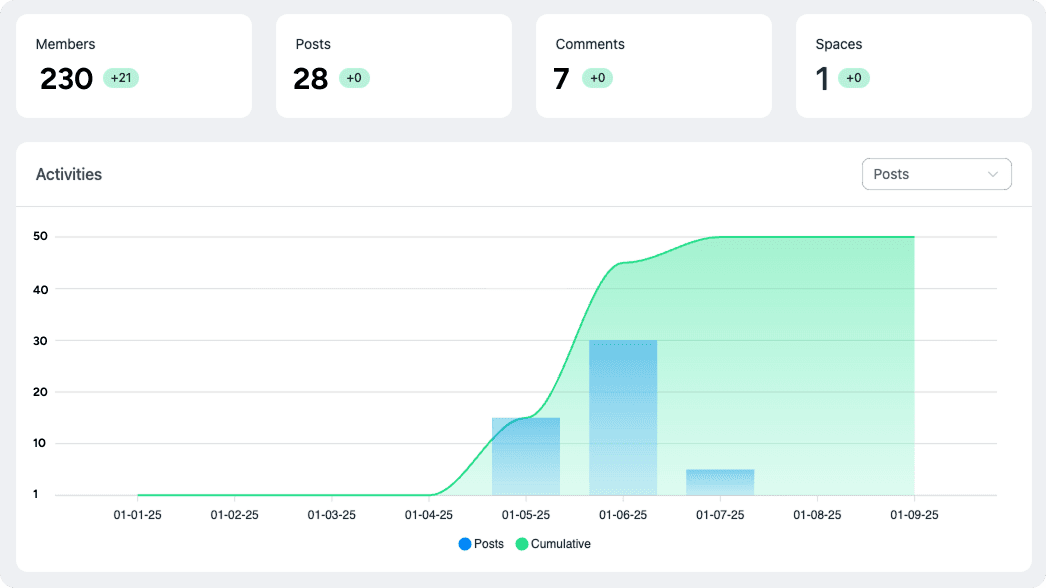
When I built Founders After Hours, my goal was to create a real-time CRM that possessed a soul. Unlike a traditional database filled with cold leads, this infrastructure carries context, emotion, and life. Announcements and updates are no longer just notifications; they are the start of a conversation between peers. In just a short span, this project brought together over 230 thoughtful, curious, and driven members. These are not just users; they are real people willing to share, learn, and build alongside each other. What started as a quiet idea became a dynamic space where founders exchange insights and troubleshoot challenges daily.
The Compounding Benefits of Shared Growth
When a community is built with the right intention, it evolves into a powerful growth engine that provides benefits far beyond simple visibility. These advantages are structural and compounding, creating a defensible advantage around the brand that is incredibly difficult to replicate.
1. Sustainable Retention and Organic Feedback
Retention is a natural byproduct of feeling seen and valued, and people stay where they feel they belong. In a community-centric model, churn is reduced because the relationship is rooted in mutual support rather than a transactional service. Furthermore, this environment creates the fastest possible feedback loops. Because my members were already talking to each other, I did not need to rely on traditional surveys to understand their needs. The insights flowed naturally from our daily interactions, allowing for rapid improvements and a better understanding of what founders actually care about.
2. Growth from Within: Content and Trust
Within a community, every interaction is a form of service, which creates a foundation of trust that makes future offers feel like natural solutions. Additionally, the community becomes a self-sustaining content engine. Members share their wins, their insights, and their unique stories, providing a constant stream of authentic fuel for the brand's narrative. I call this Human SEO, where the right people invite other high-value members, creating an organic network effect that outperforms any ad campaign. Conversations build confidence in a service far more effectively than any polished case study ever could.
How I Reached 300+ Real Members in Two Months
Building a high-value community does not require aggressive marketing or viral tricks; it requires a commitment to value and personal connection. I reached over 300 real members in just two months by starting small and staying focused on direct, personal outreach. Instead of mass email blasts, I focused on handwritten messages and personal invitations, inviting founders into a space designed for real talk.
The early adopters were not passive users; they were active contributors who set the tone for the entire platform. Whether they were sharing product tips, posting growth screenshots, or initiating collaborative threads, their activity was the energy that powered the space. I learned that the success of this phase depends on three key pillars:
Clarity of Purpose: I avoided the trap of trying to be everything to everyone and focused exclusively on the niche of integrity-driven builders.
Personal Onboarding: I welcomed every new member personally, ensuring they felt the human element of the platform from day one.
Consistency of Presence: I showed up daily not as a moderator, but as a fellow member, which built the trust necessary for the community to thrive.
Using Community as a CRM (With Personality)
One of the most powerful aspects of community-centric platforms is their ability to function as a highly sophisticated CRM. Modern tooling, such as Circle or FluentCommunity, allows for advanced member tagging, segmentation by interest, and triggered sequences. I can track contributions, host private events, and send targeted messages with the same precision as traditional marketing software.
However, the experience for the member is completely different. It does not feel like they are being managed by software; it feels like they are attending a well-hosted dinner party. When a platform blends technical efficiency with human personality, members are far more likely to refer products, refer partners, and remain loyal through any challenges. This is the kind of growth that is impossible to fake because it is built on genuine bonds formed between people who are moving in the same direction.
From Niche Focus to Resilient Networks
There is immense power in the decision to go narrow. I was not trying to reach every business owner on Earth; I wanted the right ones. By focusing on people who care more about solving problems than just selling products, I created a resilient network built on shared values. Once this foundation of trust is established, the network grows through word-of-mouth and high-value referrals.
The tools I used, whether the clean interface of Circle or the flexible automations of FluentCommunity, were ultimately secondary to the intention behind them. These platforms enabled email broadcasts, private groups, and engagement tracking, but their primary purpose was to facilitate the flow of value. A community scales not by shouting louder, but by listening better and providing a space where that listening can happen at scale. It turns your business from a service into a system of shared growth.
Connection is the Product
At the end of the day, I believe that people are not just looking for more tools; they are looking for a place to belong. When you offer a community-centric platform, you are transforming your business from a static service into a dynamic system of shared growth. You are turning your customers into collaborators and your brand into a destination they want to return to daily.
The future belongs to those who prioritize connection. When your community is integrated, value-driven, and heart-centered, you no longer have to chase attention. Instead, you have built a system where the right people find their way to you, stay for the value, and grow alongside you. Connection is the product, and if you can offer that, you will never have to chase attention again.